

Korean red ginseng (known locally as hongsam) is South Korea’s most trusted daily wellness staple, prized for sustained stamina, improved blood circulation, and immune support. Unlike a sudden caffeine spike, its active compounds—called ginsenosides—work as adaptogens to help your body manage physical stress over time. If you want real benefits rather than sugary marketing, you need to know how to read the label and choose the right form.
Walk through Incheon Airport or any department store in Seoul, and you will see entire aisles glowing with dark red boxes. It is given to high schoolers studying for college entrance exams, busy office workers, and aging parents alike.
The Steaming Process That Changes Everything
Fresh ginseng pulled straight from the soil is pale yellow and known as susam. When dried naturally in the sun, it becomes baeksam (white ginseng).
Red ginseng, however, is created through a repetitive process of steaming fresh six-year-old roots and drying them under controlled heat. This caramelizes the natural starches, turning the root an amber-red color.
More importantly, the heat transforms the chemical structure of the plant. It creates rare, heat-activated ginsenosides (such as Rg3, Rh1, and Rh2) that do not exist in raw ginseng. These specific compounds are much easier for human intestines to break down and absorb.
Six years is the sweet spot in Korea. Root growers rarely harvest earlier because the ginsenoside density peaks at year six, after which the root becomes woody and prone to rot.
3 Proven Benefits You Can Actually Feel
Korea’s Ministry of Food and Drug Safety officially recognizes red ginseng for five specific functional claims. Among those, three stand out in everyday use.
- Steady, non-jittery energy: Ginsenosides support adrenal health and reduce cellular fatigue markers (like lactic acid) without racing your heart like an espresso shot.
- Better peripheral blood circulation: Red ginseng inhibits platelet aggregation, helping warm cold hands and feet by improving micro-capillary flow.
- Immune regulation: It stimulates natural killer (NK) cell activity and macrophage production, helping the body bounce back from seasonal changes.
Do not expect an instant miracle on day one. Most people notice a clear difference in their morning wake-up sluggishness after about two to three weeks of consistent daily intake.
Comparing Formats: Sticks, Pure Extracts, and Slices
Choosing the right product depends on whether you value convenience, price, or pure potency. Here is how the most common Korean market formats stack up:
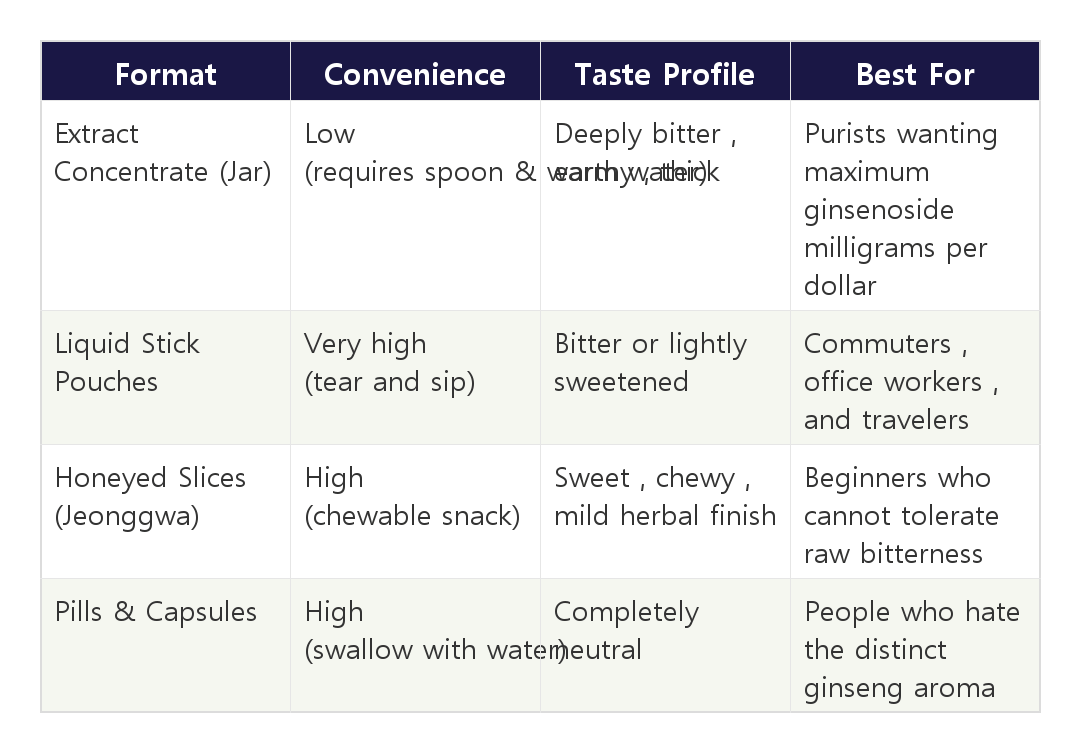
If you choose liquid stick pouches, always check the ingredient list on the back. The best ones contain only red ginseng extract and purified water, without high fructose corn syrup or synthetic flavorings.
How to Read the Label Like a Seoul Local
Never buy a red ginseng product based purely on the front brand label. Turn the box around and look for three specific letters: Rg1 + Rb1 + Rg3.
These three letters represent the indicator ginsenosides monitored by Korean health authorities. Premium concentrates typically provide between 5.5 mg and 30 mg of combined Rg1, Rb1, and Rg3 per daily serving.
If the nutrition facts panel lists “red ginseng flavoring” or shows less than 3 mg of active ginsenosides, you are holding glorified sugar water. Look also for the mark of the Korean Health Functional Food association (건강기능식품) on the package, which confirms batch testing.

Who Should Be Cautious Before Taking It
In traditional Korean medicine, red ginseng is classified as a “warm” herb. It raises metabolic heat, which makes it unsuitable for every body type and situation.
If you naturally run hot, get frequent night sweats, or develop skin flushing easily, start with a half-dose every other day to see how your system reacts. Taking it late in the evening can also trigger mild insomnia because of heightened alertness.
Furthermore, because red ginseng promotes blood circulation and mild blood thinning, anyone on prescription anticoagulant medications or preparing for surgery should consult their doctor first. Those managing diabetes should also track their blood sugar carefully, as ginseng can modestly amplify insulin sensitivity.
FAQ
Q. What is the best time of day to take Korean red ginseng?
A. Take it in the morning on an empty stomach or about 30 minutes before breakfast. If you have a sensitive stomach that feels upset by herbal extracts, take it right after breakfast instead. Avoid taking it after 4:00 PM so it does not interfere with your sleep cycle.
Q. Can I take red ginseng together with my morning coffee?
A. It is best to space them out by at least an hour. Combining high-potency ginseng directly with strong caffeine can cause unnecessary palpitations, nervous tension, or mild stomach irritation in caffeine-sensitive individuals.
Q. Why are 6-year-old roots considered the standard?
A. Ginseng roots take six full years of soil cultivation to reach biological maturity, balancing root girth and ginsenoside composition. After six years, the root skin thickens, roots frequently become diseased, and active saponin ratios begin to decline.
Summary
- Korean red ginseng undergoes a specialized steaming and drying process that activates easily absorbed ginsenosides not found in raw roots.
- Always verify the combined amount of Rg1 + Rb1 + Rg3 on the label to ensure you are getting an effective dose rather than a sweetened beverage.
- Take your dose in the morning for sustained daily stamina, and check with a physician if you take blood thinners or diabetes medications.
Where to book — Sister Unice’s picks
Real, well-reviewed places I’d actually book, with the link to reserve:
- Tosokchon Samgyetang (Ginseng Chicken Soup) — Seoul’s premier ginseng chicken soup landmark with over 12,000 reviews (4.2/5 rating), serving tender whole young chicken stuffed with whole ginseng root, glutinous rice, and medicinal herbs inside a historic hanok.
- Seoul Yangnyeongsi Herbal Medicine Market — Rated 4.0/5 across thousands of visitors, this historic market trades roughly 70% of South Korea’s medicinal herbs, letting you buy fresh raw ginseng and custom-brewed tonics directly from licensed herbalists.
Links go to third-party booking/shopping sites. I only list places and products with genuinely strong reviews.
Seoul’s premier ginseng chicken soup landmark with over 12,000 reviews (4.2/5 rating), serving tender whole young chicken stuffed with whole ginseng root, glutinous rice, and medicinal herbs inside a historic hanok.
Not a paid placement or affiliate link — just a resource Unice trusts.
Leave a Reply