

Slugging your face and applying a dedicated lip sleeping mask work by creating a protective seal that prevents overnight water loss, giving you supple, plump skin by morning.
- Slugging is just classic Korean barrier care with a fun internet name
- Lip sleeping masks do what standard stick balms cannot
- Slugging vs. regular night creams: what your face actually needs
- A gentle 4-step routine to slug without breakouts
- Who should skip full-face slugging entirely?
- FAQ
- Where to buy — Sister Unice’s picks
- Sources
Slugging is just classic Korean barrier care with a fun internet name
Slugging sounds messy, but it simply means coating your face in an occlusive layer right before bed. It locks in all the hydrating serums underneath and stops dry bedroom air from sucking out moisture while you sleep.
Slugging may have gone viral online, but the idea is nothing new in Korea.
Korean cosmetic labs took that timeless household trick and refined it into lighter, skin-friendly sleeping balms. Instead of heavy grease, modern formulas use ceramides, panthenol, and squalane to seal the barrier without suffocating your pores.
Lip sleeping masks do what standard stick balms cannot
Most drugstore lip balms sit on top of dead skin with heavy waxes that provide temporary relief. A true Korean lip sleeping mask is formulated to gently melt away dead flakes with fruit enzymes while flooding the lip tissue with berry antioxidants and moisture.
Here is an insider tip: do not rub it in completely like a lotion. You want a noticeable, glossy layer that acts like a blanket over your lips until dawn.

Slugging vs. regular night creams: what your face actually needs
Do you really need an extra occlusive step on top of your standard night cream? It depends entirely on your skin barrier and how dry your bedroom gets at night.
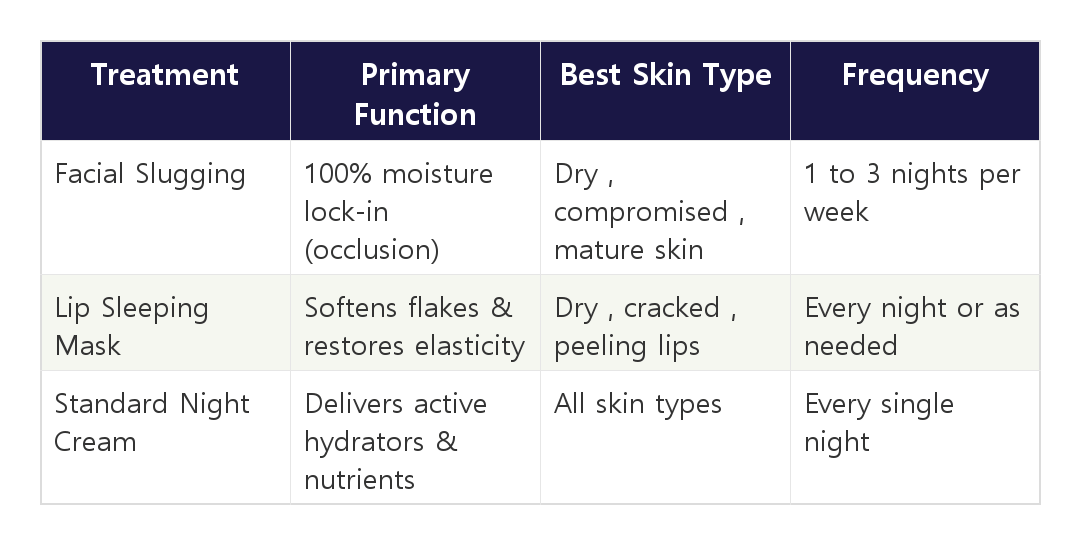
A gentle 4-step routine to slug without breakouts
Slugging seals everything beneath it, which means it will also trap dirt and bacteria if you cut corners. Follow this clean order to keep your complexion clear and glowing:
- Wash your face thoroughly: Use a mild, hydrating cleanser so your skin starts clean and calm.
- Drench with humectants: Layer a hydrating essence or hyaluronic acid toner onto damp skin.
- Apply your normal moisturizer: Let your regular soothing cream sink in for two minutes.
- Seal with a pea-sized occlusive: Warm a tiny amount of petrolatum or a barrier balm between your fingers and pat it gently across your cheeks and forehead.
One critical caution: never slug on top of strong prescription retinoids or concentrated chemical exfoliating acids. The occlusive layer makes those active ingredients penetrate much deeper, which can cause chemical burns and intense irritation.

Who should skip full-face slugging entirely?
If you have active cystic acne or very oily skin, full-face slugging is not for you. The occlusive barrier can trap excess sebum and bacteria, causing painful flare-ups.
In humid summer weather, a heavy balm layer can be too much and leave tiny bumps along the jawline. If you break out easily, keep slugging strictly to dry spot areas like around your nostrils or under your eyes.
Your lips, on the other hand, do not have sebaceous oil glands. That means almost everyone can safely use a rich lip sleeping mask every night without worrying about clogged pores.
FAQ
Q. Won’t slugging ruin my pillowcases?
A. Apply your occlusive balm at least twenty minutes before lying down so it settles slightly onto your skin. You can also switch to a smooth satin or washable silk pillowcase, which absorbs far less moisture than regular cotton.
Q. Can I use a regular lip balm instead of a lip sleeping mask?
A. A regular wax balm acts mostly as a barrier, while a lip sleeping mask contains active moisture binders and softening emollients designed to break down dead skin overnight. It delivers much deeper hydration.
Q. How often should I slug my face?
A. If your barrier is severely dry or parched from cold winds, slugging two to three nights a week is plenty. When your skin feels balanced again, once a week is ideal for maintenance. Korean slugging and lip masks focus on overnight occlusion to prevent transepidermal water loss. Always apply your occlusive layer over clean, water-based hydration, never over strong acids or retinol. Lip masks are safe for daily use because lips lack oil glands, while full-face slugging is best done 1 to 3 times a week.
Where to buy — Sister Unice’s picks
The exact items I’d point a friend to, with the link to buy:
- LANEIGE Lip Sleeping Mask — America’s top-rated prestige lip treatment backed by multiple Allure Readers’ Choice awards and thousands of 5-star reviews for eliminating overnight flakiness.
- Torriden Solid In Ceramide Lip Essence (1+1 Set) — A lip essence that uses 5D ceramides for restorative lip slugging.
- COSRX Advanced Snail 96 Mucin Power Essence — A global cult favorite boasting over 100,000 rave reviews and clinically proven hydration gains to prep skin with the essential plumping humectants K-beauty slugging requires.
- COSRX Advanced Snail 92 All In One Cream — This 92% snail filtrate gel-cream creates a breathable, bouncy seal for overnight slugging without clogging pores.
Links go to third-party booking/shopping sites. I only list places and products with genuinely strong reviews.
Unice recommends this iconic little pink jar because its antioxidant-rich berry complex gently dissolves dead skin cells overnight, leaving your lips cushiony and flake-free by sunrise.
Not a paid placement or affiliate link — just a resource Unice trusts.
Sources
American Academy of Dermatology
Cleveland Clinic Health Essentials
VisitKorea Official Tourism Portal