
Stocking an authentic Korean kitchen in the United States used to mean trekking to a crowded specialty market in the nearest big city. Today, finding gochujang, frozen dumplings, and sticky rice is easier than ever, but knowing where to buy each item will save you serious money and hassle. The secret comes down to splitting your shopping: head to H Mart for delicate fresh items, hit Costco for bulk staples, and lean on Amazon for shelf-stable backups.
Once you figure out which item belongs in which cart, your weekly meal prep becomes effortless. Here is the exact game plan to build a delicious Korean pantry without overpaying.
- H Mart is the undisputed home for fresh Asian produce and specialty staples
- Why should you check Costco before heading anywhere else?
- The Amazon shortcut for shelf-stable pantry backups
- Comparison: Where to buy your Korean pantry staples
- Build your smart 3-store grocery routine
- FAQ
- Summary
- Where to buy — Sister Unice’s picks
- Sources
H Mart is the undisputed home for fresh Asian produce and specialty staples
When you need ingredients with a short shelf life or very specific Korean seasonings, nothing beats H Mart. The produce section alone carries items you will almost never see in a standard American supermarket.
Look for aromatic perilla leaves (kkaennip), solid Korean radishes (mu), and bundles of fresh crown daisy (ssukgat).
These greens make stews like doenjang jjigae and spicy pork bulgogi taste like home.
H Mart is also your go-to destination for precisely sliced barbecue meats. Pick up paper-thin brisket (chadolbagi) or shaved pork belly cut specifically for grilling at the table.
- Fresh roots and greens: Perilla leaves, Korean chives, fresh ginger, and Asian pears for meat marinades.
- Fermented pastes and powders: Authentic coarse gochugaru (red pepper flakes), aged doenjang, and soup soy sauce (guk-ganjang).
- Refrigerated staples: Fresh rolled tteok (rice cakes), fresh soft tofu tubes for sundubu, and local banchan side dishes.
Do you really need to buy every single sauce here?
Not necessarily, but for your primary fermented pastes, picking up a trusted brand at an Asian grocer ensures the right depth of flavor.
Why should you check Costco before heading anywhere else?
If you have a Costco membership, you might be surprised by how much Asian pantry space they have carved out. Costco has quietly become one of the cheapest places in America to buy high-rotation Korean staples.
The standout deal is almost always the rice. You can pick up a 20-pound or 50-pound bag of premium medium-grain Calrose rice for a fraction of boutique grocery prices.
They also regularly stock giant tubs of Jongga brand kimchi in their refrigerated walk-in coolers. For a family that goes through kimchi every week, that single tub pays for half your annual membership.
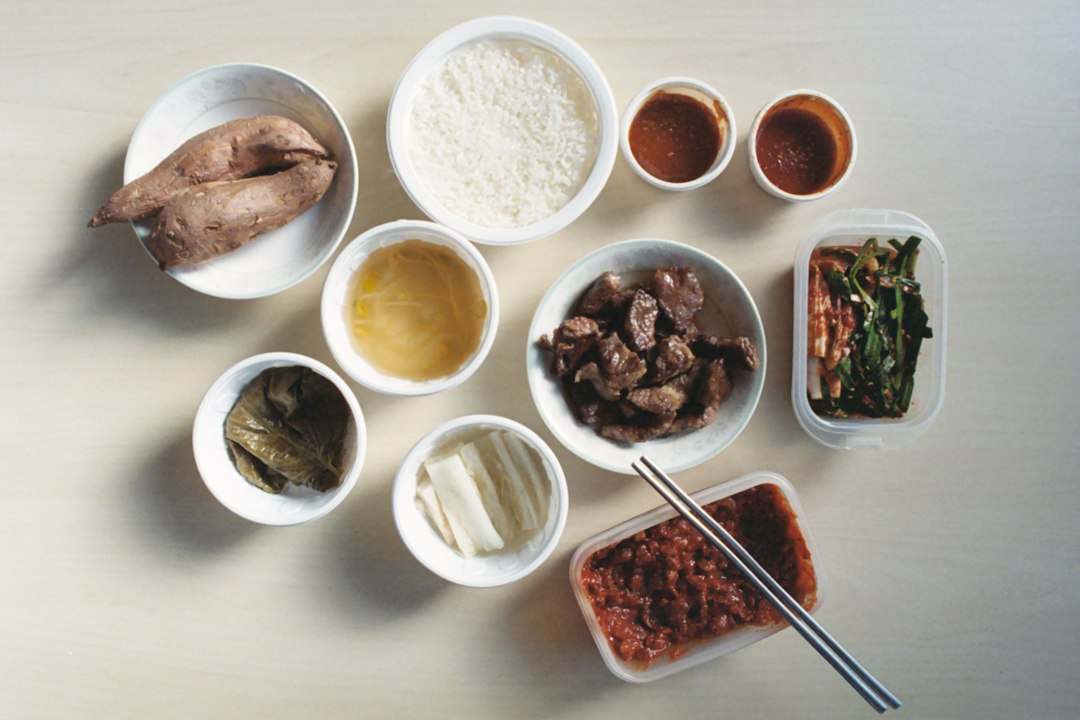
Don’t skip the freezer section either. Costco frequently carries jumbo bags of CJ Bibigo steamed dumplings, crispy vegetable potstickers, and frozen pre-seasoned bulgogi.
- Rice and seaweed: Multi-packs of seasoned roasted seaweed snack packs (gim) and large sacks of medium-grain rice.
- Freezer shortcuts: Bulk mandu (dumplings), Korean corn dogs, and frozen scallion pancakes.
- Proteins: Fresh USDA Choice or Prime short ribs (ask the meat counter for “flanken-style” cut across the bone for kalbi).
The Amazon shortcut for shelf-stable pantry backups
Not everyone lives within a twenty-minute drive of an Asian supermarket. If your nearest Korean grocery requires a road trip, Amazon works well as a reliable safety net for dry goods.
Dry staples like sweet potato glass noodles (dangmyeon for making japchae) and dried seaweed (miyeok for soup) travel easily and store in your cupboard for months. Pre-packaged anchovy and kelp soup stock dashi bags are also great online purchases.
A quick word of warning: always check the unit price before clicking buy on heavy liquid condiments. Third-party sellers on online marketplaces often mark up heavy bottles of soy sauce or sesame oil to cover shipping fees.
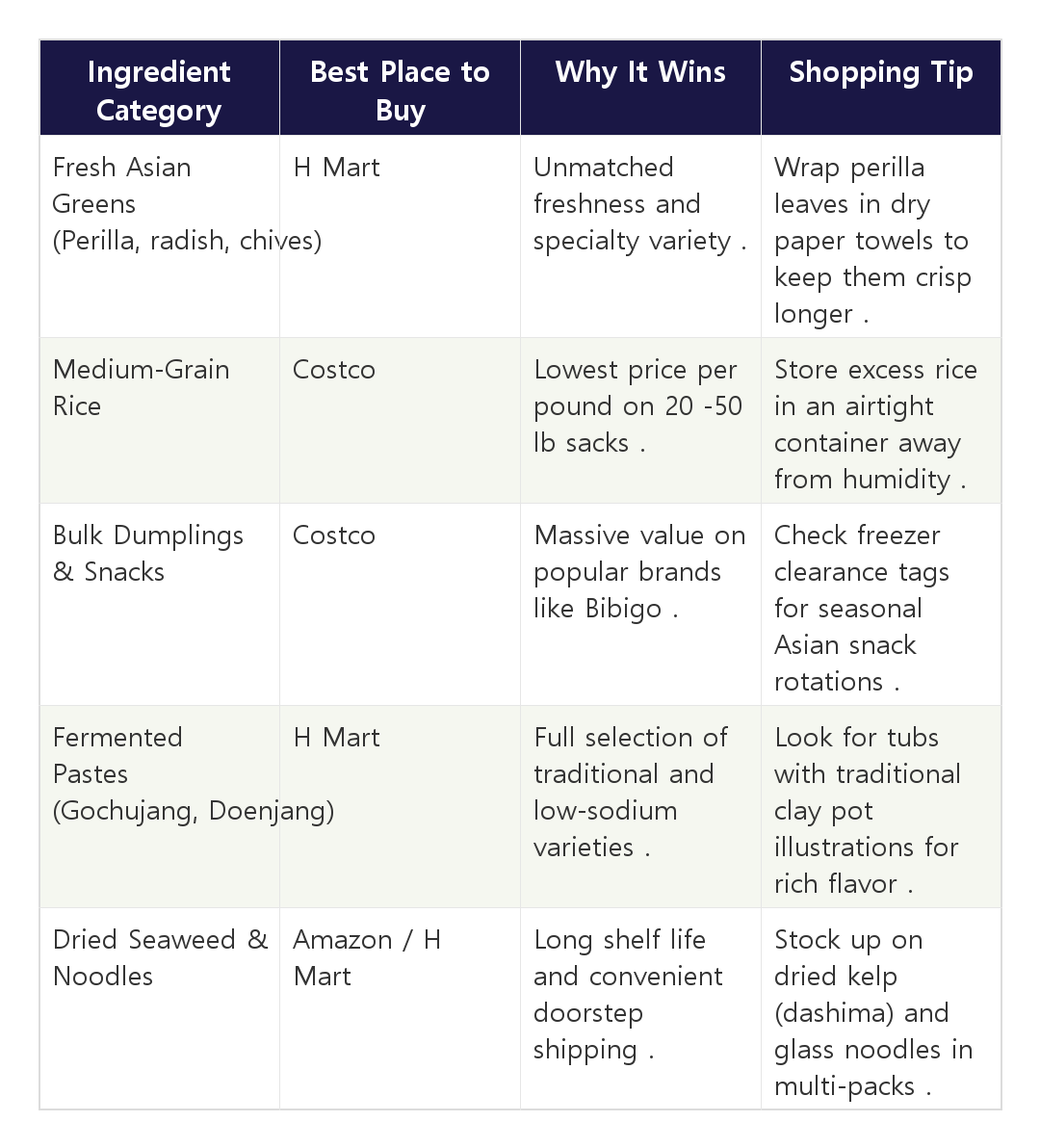
Comparison: Where to buy your Korean pantry staples
Deciding between stores gets simple when you break your shopping down by category and shelf life. Here is how the three retailers stack up for common everyday items:
Build your smart 3-store grocery routine
You do not need to visit three stores every weekend to cook great Korean food. The easiest way to keep your kitchen organized without burning out is setting a simple shopping rhythm.
Plan a Costco trip once a month to restock your rice bin, grab a flat of roasted seaweed snacks, and reload your freezer with dumplings. This handles the backbone of your quick weeknight meals.
Drop by H Mart once or twice a month for crisp produce, fresh tofu, and specialty marinades. If a sudden craving for ramyun or dried noodles strikes between trips, let an online delivery order bridge the gap.
FAQ
Q. Is kimchi cheaper at Costco or H Mart?
A. Pound for pound, Costco is almost always cheaper for large tubs of commercial kimchi like Jongga. However, H Mart gives you a far wider selection, including vegan kimchi, radish kimchi (kkakdugi), and small-batch regional styles.
Q. What Korean items should I avoid buying on Amazon?
A. Try to avoid heavy glass bottles of basic liquids like standard soy sauce, mirin, or cooking wine. Shipping weight makes them twice as expensive online compared to buying them off a local grocery shelf.
Q. Can I use regular supermarket beef for Korean bulgogi?
A. Yes, but you will need to slice it yourself. If you freeze a beef chuck eye or ribeye roast for about an hour until firm, you can slice it paper-thin across the grain with a sharp chef’s knife.
Q. Does Costco carry Korean ramyun packs?
A. Most locations in suburban areas carry multi-packs of popular instant noodles like Shin Ramyun or Nongshim Tonkotsu bowls, usually sold by the case at great prices.
Summary
- Use Costco for high-volume staples like 20-pound bags of rice, flat packs of seaweed snacks, and frozen dumplings.
- Count on H Mart for fresh specialty produce, thinly sliced barbecue meats, and authentic fermented pastes.
- Keep Amazon as your backup plan for lightweight, shelf-stable items like dried noodles, soup stock bags, and packaged ramyun.
Where to buy — Sister Unice’s picks
Disclosure: Some links below are affiliate links. If you book or buy through them, I may earn a small commission at no extra cost to you. I only recommend what I’d use myself. As an Amazon Associate I earn from qualifying purchases.
The exact items I’d point a friend to, with the link to buy:
- Korean American: Food That Tastes Like Home by Eric Kim — A New York Times bestseller with over 2,000 5-star ratings that expertly maps out how to bridge H Mart pantry gems with Costco bulk staples.
- Maangchi’s Big Book of Korean Cooking by Maangchi — Rated 4.8/5 across thousands of reviews, it features an indispensable photo glossary of authentic ingredients so you know exactly what to look for on Asian grocery shelves.
- The Korean Vegan Cookbook by Joanne Lee Molinaro — A James Beard Award winner and instant NYT bestseller holding a stellar 4.8-star average, detailing how to turn plant-based staples from Korean grocers into rich, traditional flavors.
- Cook Korean!: A Comic Book with Recipes by Robin Ha — A celebrated New York Times bestselling graphic-novel cookbook with glowing 4.8-star ratings that visually decodes Korean pantry essentials and sauces for beginners.
Links go to third-party booking/shopping sites. I only list places and products with genuinely strong reviews.
Eric Kim perfectly captures the modern immigrant kitchen, guiding you on how to turn everyday finds from American supermarkets and H Mart into effortless, soul-warming Korean meals.
As an affiliate, I may earn a small commission from purchases — at no extra cost to you.