

Spicules are microscopic, needle-shaped structures harvested from sea sponges that act like a temporary micro-channeling treatment in a bottle. In Korean skincare, they are suspended in serums to drive active ingredients deep into the epidermis and trigger cellular turnover. However, while the prickling sensation delivers glowing results for resilient skin, spicule powder can easily trigger flare-ups or barrier damage if your skin is already vulnerable.
The ocean-floor science behind the prickling sensation
If you press a spicule serum onto your cheek, you will immediately feel a sharp, static-like prickle. That is not a chemical reaction or menthol trick; it is thousands of tiny silica needles physically settling into your pores.
Most cosmetic spicules come from freshwater and marine sponges, such as Spongilla lacustris. In nature, these mineral spikes form the sponge’s structural skeleton, but cosmetic labs purify them into an ultra-fine, microscopic powder.
Once pressed into the skin, the spicules create tiny micro-pathways through the stratum corneum. This allows peptides, centella, and hyaluronic acid to sink deeper rather than evaporating on the surface.
The best part? Your skin naturally expels these micro-needles within 48 to 72 hours through its routine shedding cycle, so nothing remains permanently trapped.
Spicule serum versus traditional microneedling
During late-night runway fittings in Manhattan’s Garment District, models and stylists were constantly chasing high-end dermatological treatments with zero downtime. Back then, clinic microneedling meant red, raw skin for days.
Liquid spicules offer a gentler, needle-free alternative to mechanical rollers, but their mechanics differ significantly from stainless-steel pens.
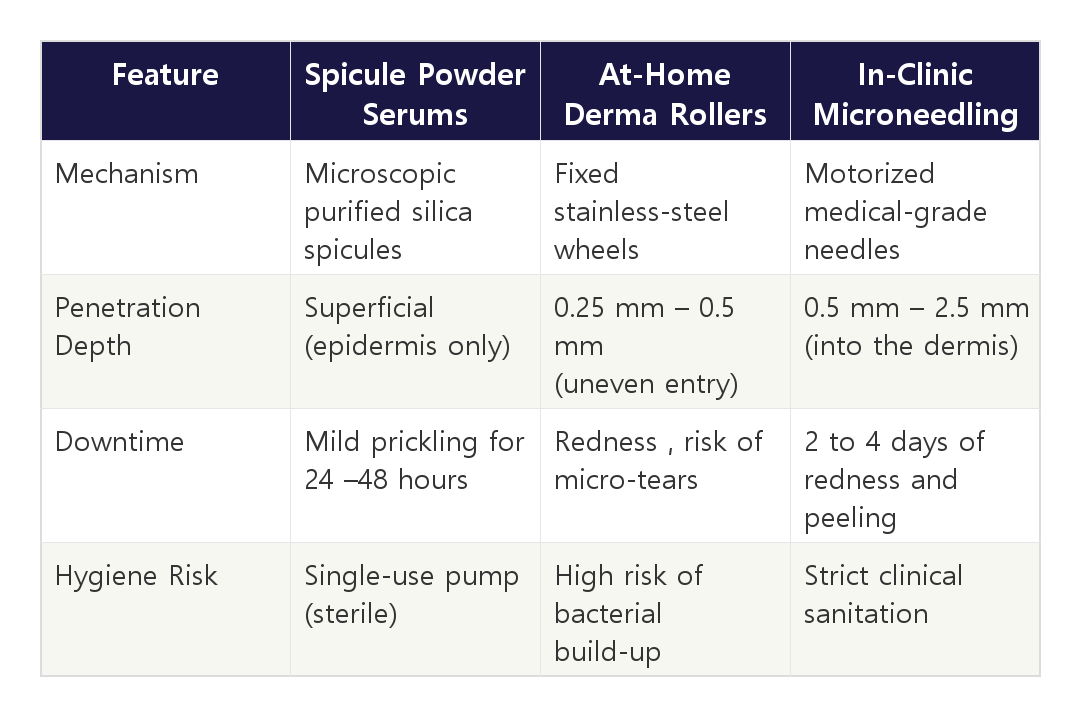
Because spicules enter perpendicular to the skin when pressed, they eliminate the risk of dragging or micro-tearing often caused by cheap rolling needles.
Four skin types that should completely skip spicules
While social media makes spicule ampoules look like an easy shortcut to poreless “glass skin,” they are fundamentally an irritant-based stimulant. If your skin falls into any of the following categories, leave these serums on the shelf.
- Active cystic or pustular acne: Spicules do not kill bacteria; pressing them across active pimples can rupture lesions and drag C. acnes bacteria into neighboring clear pores.
- Rosacea and chronic flushing: The micro-punctures trigger localized inflammation and vasodilation, which can cause a severe, prolonged flare-up in sensitive vascular networks.
- Compromised skin barrier or active eczema: If your face currently stings when you apply plain moisturizer, introducing thousands of sharp mineral spikes will only worsen moisture loss.
- Recent chemical peel or laser patients: Freshly resurfaced skin has no protective lipid barrier to handle foreign physical particles.
Trust me on this one: skipping a harsh trend saves you months of rebuilding a shattered moisture barrier.
Smart application rules to avoid inflammation
If your skin is healthy and you want to try spicules to soften texture or fade stubborn post-blemish marks, application technique makes all the difference.
First, abandon the habit of rubbing your serums in circles. Rubbing spicules creates unnecessary lateral friction, which leads to immediate surface scratching and redness.
Instead, dispense a dime-sized amount onto clean fingers and press it firmly into the skin, using gentle rolling motions with your palms.
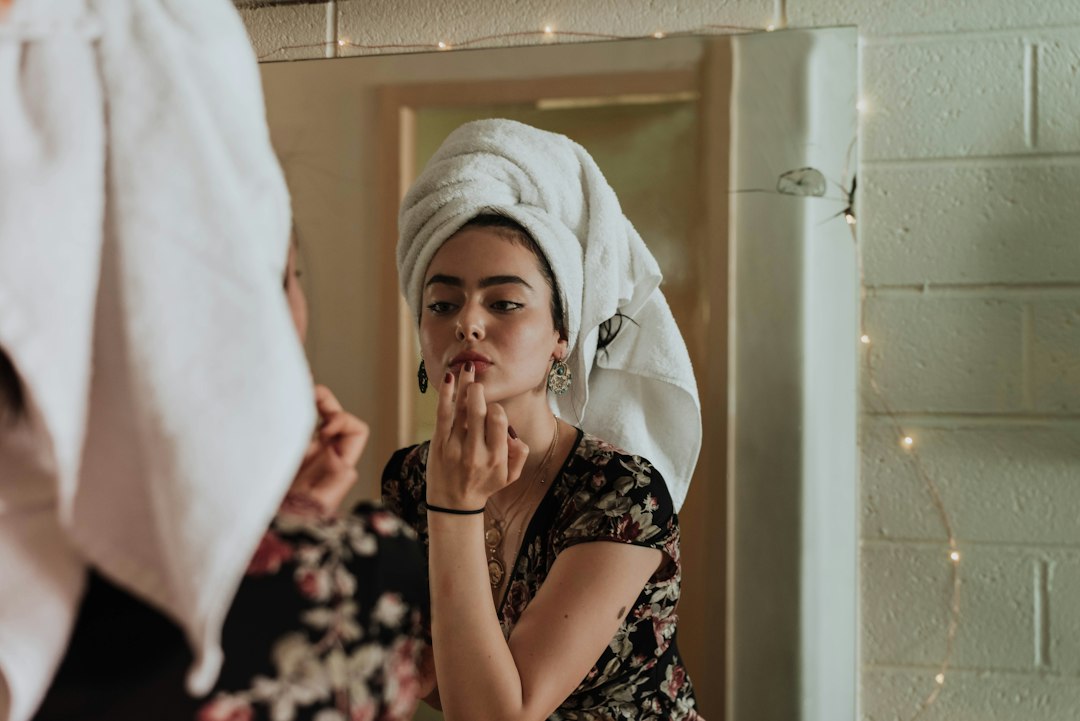
Always lock in the serum with a thick, calming barrier cream rich in ceramides, panthenol, or madecassoside. You will continue to feel tiny prickles when you wash your face the next morning, but that sensation simply confirms the spicules are working before they naturally shed.
Can you mix spicules with vitamin C or retinoids?
The short answer is: do not combine them in the same routine unless your skin is exceptionally resilient and already acclimated.
Because spicules dramatically increase product absorption, applying concentrated L-ascorbic acid, high-strength AHA/BHA, or tretinoin right over them can multiply irritation ten-fold.
Keep your spicule evenings dedicated to soothing hydration. If you use prescription retinoids or strong acids, alternate your nights so your skin gets a chance to recover between treatments.
FAQ
Q. How long does the prickling feeling last after applying a spicule serum?
A. The tingling sensation typically peaks during application and gradually softens over 24 to 48 hours. You will mostly feel it when touching your face, washing, or applying moisturizer.
Q. Can spicules clog pores or cause blackheads?
A. Pure cosmetic spicules are inorganic mineral needles that do not decompose or turn into sebum plugs. However, if a serum formula contains heavy comedogenic oils that don’t suit your skin, the base product itself could cause congestion.
Q. Is it safe to wear makeup over spicule products?
A. It is best to use spicules during your evening routine so your skin can rest overnight. If you must apply makeup the next day, use gentle patting motions with a clean cushion puff rather than buffing with dense brushes.
Q. Can I use a spicule serum every single day?
A. Low-concentration daily formulations exist, but most skin types see optimal results using them only two to three evenings per week. Always start slowly to monitor your skin’s tolerance. Spicules are microscopic sponge needles that temporarily puncture the stratum corneum to boost skincare absorption. Those with active cystic acne, rosacea, or damaged moisture barriers should strictly avoid spicule products. Always press the serum into the skin rather than rubbing, and pair it with barrier-repair moisturizers instead of harsh actives.
Where to buy — Sister Unice’s picks
Disclosure: Some links below are affiliate links. If you book or buy through them, I may earn a small commission at no extra cost to you. I only recommend what I’d use myself. As an Amazon Associate I earn from qualifying purchases.
The exact items I’d point a friend to, with the link to buy:
- VT Cosmetics CICA Reedle Shot 100 — With over 4,000 verified ratings averaging 4.4 stars, this cult-favorite daily booster delivers 95,000 cica-coated sponge spicules to smooth rough texture and boost ingredient penetration.
- Medicube Zero Exosome Shot 2,000 PPM Serum — Holding an impressive 4.6-star rating across more than 4,300 reviews, this clinical spicule formula blends exosome-coated microneedles with AHA, BHA, and PHA for targeted pore refinement.
- VT Cosmetics Collagen Reedle Shot 100 — Averaging 4.7 stars among shoppers, this targeted version couples micro-spicule delivery with 500Da low-molecular collagen and exosomes to firm sagging pores and fine lines.
- VT Cosmetics Reedle Shot 300 Essence — A runaway Olive Young Global bestseller backed by hundreds of 5-star customer reviews, this high-intensity booster packs 237,500 spicules for advanced texture and stubborn acne marks every three nights.
Links go to third-party booking/shopping sites. I only list places and products with genuinely strong reviews.
Unice recommends starting right here: it provides the classic tingly, micro-channeling resurfacing spicules are famous for, cushioned with soothing centella asiatica so you get glassy results without wrecking your barrier.
As an affiliate, I may earn a small commission from purchases — at no extra cost to you.
Leave a Reply