
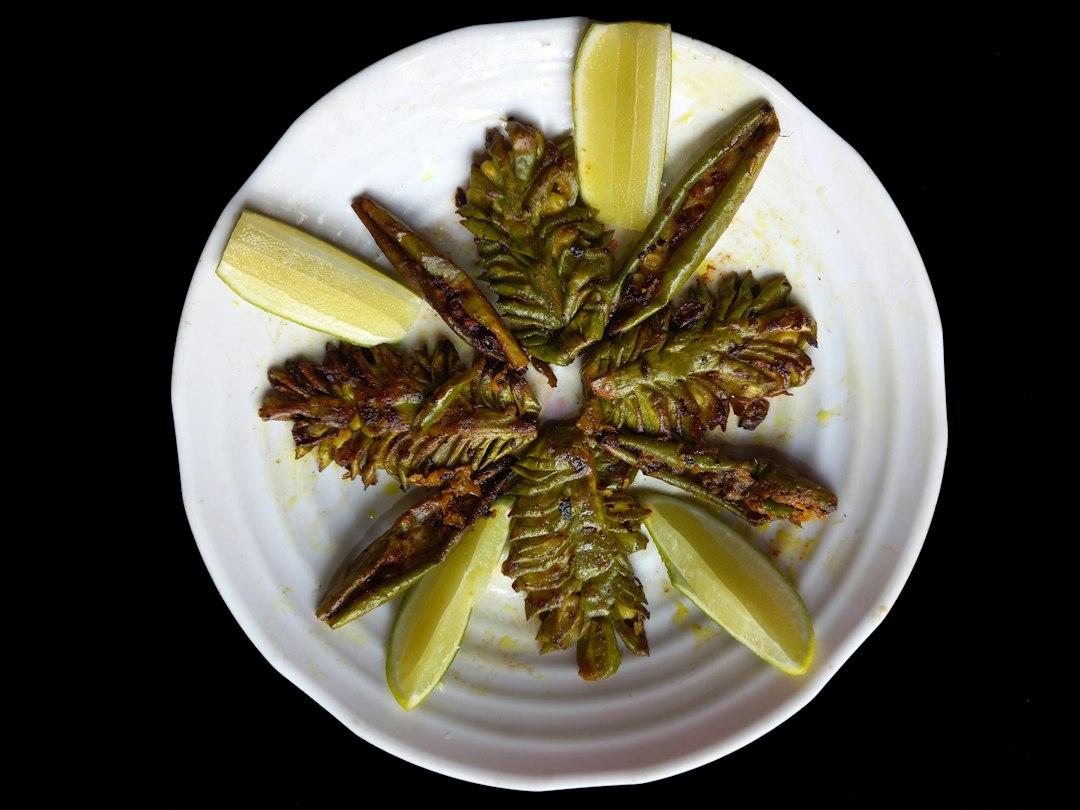
You do not have to spend entire weekends simmering soy sauce or fermenting seafood to build an authentic Korean meal at home. The smartest trick in Korean home cooking is knowing which banchan (side dishes) are worth making fresh, and which ones are actually better, safer, and far easier to buy straight from a jar or deli tub.
Stocking a few shelf-stable or long-lasting chilled jars turns a plain bowl of warm rice into a complete, satisfying meal in less than two minutes. Here is the insider guide to the jarred Korean side dishes that even seasoned home cooks happily buy instead of make.
- The Shelf-Stable Secret Every Korean Kitchen Keeps
- Salted Seafood Banchan That Are Simply Better in a Jar
- Why Dry Radish at Home? Grab Mumallaengi
- Soy-Pickled Perilla Leaves and Garlic Scapes
- Quick Comparison: Making at Home vs. Buying the Jar
- Smart Storage Rules to Make Your Jars Last for Months
- FAQ
- Where to buy — Sister Unice’s picks
- Sources
The Shelf-Stable Secret Every Korean Kitchen Keeps
Western food media often paints Korean banchan as an endless labor of love that requires chopping, blanching, and seasoning five different vegetables before every dinner. That is only half the story.
While delicate greens like seasoned spinach (sigeumchi-namul) are best eaten the day they are tossed, a huge category of banchan called mitbanchan (base side dishes) is designed specifically for preservation. These include salted ferments (jeotgal), soy-pickled vegetables (jangajji), and dense braises that thrive inside airtight glass jars for weeks or months.
Salted Seafood Banchan That Are Simply Better in a Jar
Fermented seafood side dishes, known collectively as jeotgal, are the ultimate shortcut to deep umami, but making them at home is nearly impossible without specialized commercial refrigeration and temperature-controlled curing tanks.
Buying them pre-made is not just convenient—it is significantly safer and yields far better flavor balance.
- Ojingeo-jeot (Spicy Fermented Squid): Thin strips of tender squid cured in salt, coarse gochugaru (Korean chili flakes), garlic, and ginger. It has a delightful chewy bite and delivers a savory, spicy punch that cuts right through rich soups.
- Myeongran-jeot (Salted Pollack Roe): Plump sacs of cured fish eggs with a rich, buttery, savory profile. Korean cooks love snipping a small piece over hot rice with a drop of toasted sesame oil, or folding it into soft scrambled eggs.
- Nakji-jeot (Spicy Fermented Baby Octopus): Slightly plumper and firmer than squid, packed with garlic notes. A single spoonful provides enough seasoning to finish an entire bowl of rice.
Why Dry Radish at Home? Grab Mumallaengi
Ever wondered how Korean restaurants get that impossibly crunchy, sweet-and-spicy seasoned radish with barbecue?
That is mumallaengi-muchim, made from sun-dried Korean radish strips rehydrated and tossed in a thick, sticky glaze of chili syrup, soy, and garlic. Drying radish to the exact chewiness requires days of dry autumn winds or hours in specialized dehydrators, and if the moisture level is slightly off, it turns spongy rather than crunchy.
Store-bought jars get the texture flawless every time. Because it is salted and dehydrated, an open jar stays snappy in your refrigerator door for up to two months without losing its signature crunch.
Soy-Pickled Perilla Leaves and Garlic Scapes
Vinegar and soy pickles (jangajji) provide the sharp, palate-cleansing acidity every Korean meal needs to balance rich meats and warm stews.
While pickling cucumber is simple enough, two classic varieties are tedious to prepare in small quantities and are vastly superior in jars.
- Kkaennip Jangajji (Pickled Perilla Leaves): Washing dozens of delicate, paper-thin perilla leaves, drying each one individually, and spooning soy brine between every single layer takes ages. The jarred version features perfectly infused, tender leaves ready to wrap around grilled pork or warm rice.
- Maneul-jjong Jangajji (Pickled Garlic Scapes): Fresh garlic scapes have a very short seasonal window in late spring. Jars of pickled scapes let you enjoy that sweet, garlicky snap all year round.
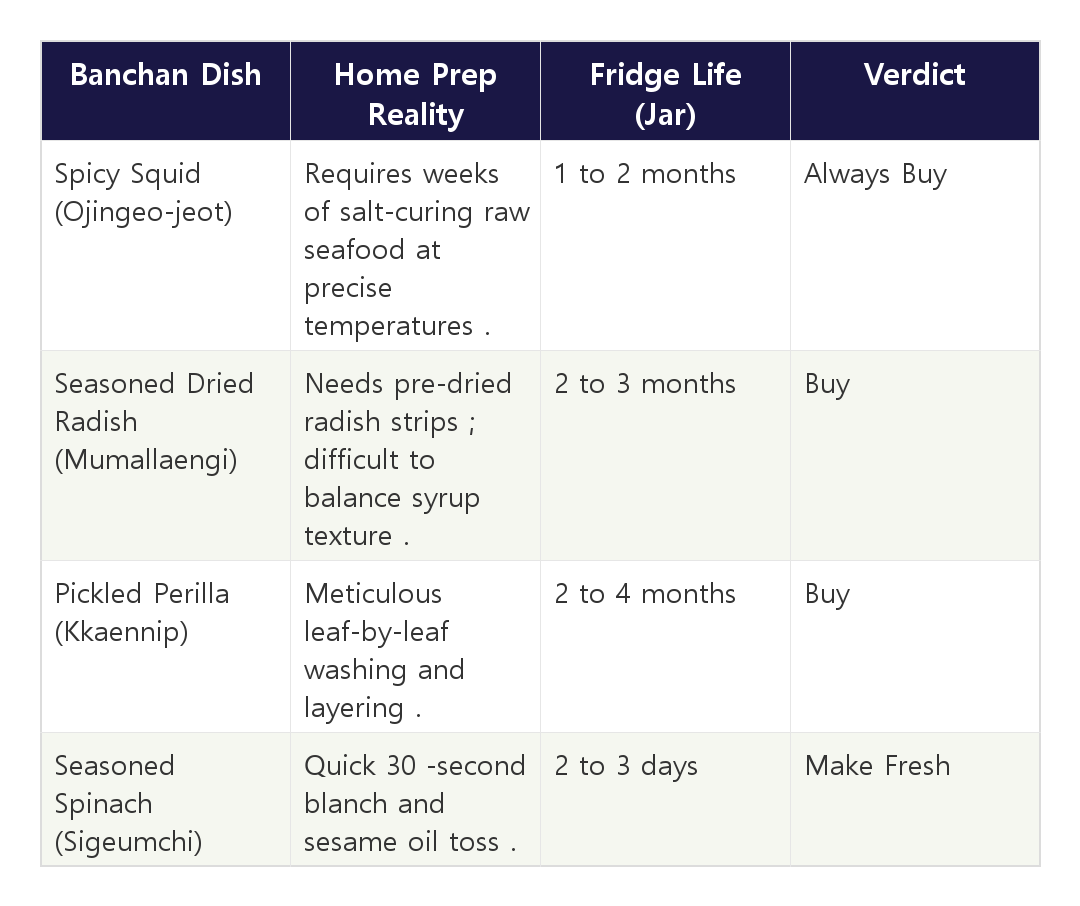
Quick Comparison: Making at Home vs. Buying the Jar
Here is a practical breakdown to help you decide when to reach for your cutting board and when to reach for a store-bought jar.
Smart Storage Rules to Make Your Jars Last for Months
High salt and acid content protect these side dishes, but improper handling can spoil a good jar quickly.
Follow three simple habits to keep your store-bought banchan pristine until the very last bite.
- Never double-dip your chopsticks: Always use a completely clean, dry utensil to scoop banchan from the jar into a separate small dish. Introducing saliva or water invites mold.
- Keep the leaves submerged: When eating pickled perilla leaves or garlic scapes, press the remaining contents down with a clean spoon so the brine covers them completely.
- Store in the coldest fridge zone: Avoid keeping seafood jeotgal in the refrigerator door shelves where temperatures fluctuate. Push them toward the middle or lower back shelves.
FAQ
Q. Where can I buy these jarred banchan in the United States?
A. Major Korean grocery chains like H Mart carry entire refrigerated aisles dedicated to jarred and packaged banchan. You can also find shelf-stable cans and pouches of seasoned perilla leaves and braised dishes on Asian food delivery platforms.
Q. Are jarred Korean side dishes very spicy?
A. Dishes like pickled perilla leaves (jangajji style) and sweet black soybeans (kongjaban) have zero spice. Cured seafood dishes like ojingeo-jeot are medium-spicy with a bold garlicky finish, meant to be eaten in small bites with plain rice.
Q. Can you freeze fermented seafood jars like myeongran-jeot?
A. Yes, pollack roe freezes remarkably well. Wrap individual roe sacs in plastic wrap and freeze them, then thaw one sac in the refrigerator whenever you want to dress up your breakfast. Stocking long-lasting jars of preserved banchan is an authentic, time-honored practice in Korean home cooking. Fermented seafood and dehydrated vegetable dishes require specialized curing and are far safer and tastier purchased pre-made. Always use dedicated, clean utensils when serving from the jar to ensure your banchan stays fresh for months.
Where to buy — Sister Unice’s picks
Disclosure: Some links below are affiliate links. If you book or buy through them, I may earn a small commission at no extra cost to you. I only recommend what I’d use myself. As an Amazon Associate I earn from qualifying purchases.
The exact items I’d point a friend to, with the link to buy:
- Sempio Canned Spicy Pickled Perilla Leaves (Kkaennip Jangajji) — Korea’s gold-standard pantry banchan in a pull-tab can, holding a 4.4/5-star rating with over 140 reviews for its tender herbaceous leaves soaked in seasoned spicy soy marinade.
- ROM America Korean Dried Shredded Pollock (Bugeopo) — A top-rated dried banchan staple boasting a 4.5/5 rating that transforms in minutes into chewy, sweet-spicy muchim or quick hangover soup.
Links go to third-party booking/shopping sites. I only list places and products with genuinely strong reviews.
Skip the labor-intensive washing and leaf-by-leaf marinating—this iconic tin delivers delicate, fragrant perilla leaves ready to drape over piping hot bowls of rice.
As an affiliate, I may earn a small commission from purchases — at no extra cost to you.
Leave a Reply