

Korean drinking culture is built on respect, community, and the specific rhythm of pouring and receiving. My father was the one who taught me Korean drinking etiquette — not a book, not a class. Understanding these small gestures will help you navigate any dinner in Korea or a K-town night out with confidence.
Use two hands for everything
The golden rule of Korean drinking is never to use just one hand when someone older or in a higher position is involved. When you pour for them, hold the bottle with your right hand and lightly support your right forearm or wrist with your left hand.
When you are the one receiving the drink, hold your small glass with both hands. It’s a physical way of showing that you are fully present and respectful of the person sharing their time with you.
Back in New York, I used to spend Friday nights teaching my friends how to grill Korean-style meat at the table. Seeing their faces light up when they mastered the “two-hand pour” always made the meal feel more like a celebration of friendship.
The polite way to take a sip
If you are drinking with someone older or a superior, it is polite to turn your head and body slightly away from them when you take a sip. You shouldn’t drink directly facing them, as exposing the bottom of your throat can be seen as too casual.
My father was very firm about this rule when I was younger. He taught me that when you drink with an elder, you clink glasses and then turn your head away to drink, rather than drinking while facing them.
It’s a habit of respect that stays with you for life, no matter where in the world you are.

Keep your glass from staying empty
In Korea, we rarely pour our own drinks; it’s actually considered bad luck in some old superstitions!
Instead, you keep a close eye on your friends’ glasses, and when they are empty, you offer to refill them.
If you see someone’s glass is empty, it’s the perfect time to show you’re paying attention. Don’t worry about being “too” attentive—it’s usually seen as being a great host or a thoughtful friend.

Essential Soju Etiquette at a Glance
If you’re worried about remembering all the details, here is a quick reference table to keep you on track during your next Korean dinner.
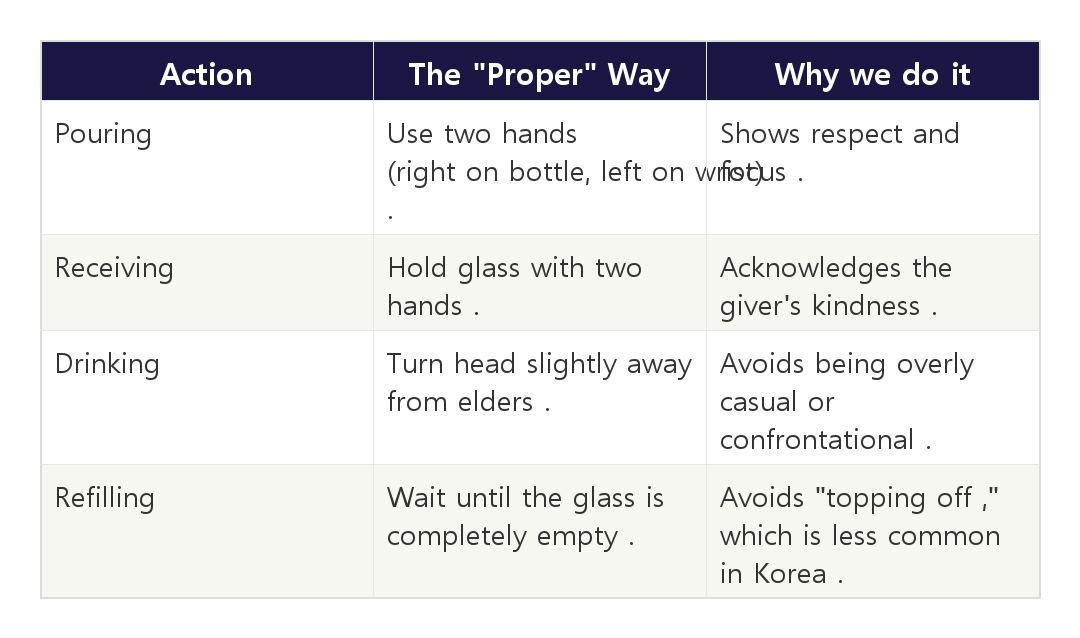
Don’t forget the Anju (Drinking Snacks)
Soju is rarely consumed on its own; it almost always comes with food, which we call “Anju.” Whether it’s spicy stew, savory pancakes, or grilled pork belly, the food is there to balance the strength of the alcohol.
Are you worried about the “burn” of the alcohol? Try a piece of pickled radish or a spoonful of soup immediately after your shot to mellow the flavor.
In my experience, the best conversations happen when the table is crowded with small plates and the soju is flowing. It’s less about getting tipsy and more about the “jeong” (deep connection) shared over a long meal.
FAQ
Q. Can I say “no” if I don’t want to drink?
A. Yes! While Korean culture is known for drinking, it is perfectly fine to decline. Simply explain you aren’t drinking for health or personal reasons, and people will usually offer you a soda or water so you can still participate in the toasts.
Q. What should I say when clinking glasses?
A. The most common word is “Geonbae!” (pronounced gun-beh), which literally means “empty glass.” You can also say “Jjan!” which is a cute, onomatopoeic way to mimic the sound of glasses clinking.
Q. Is it okay to mix soju with other drinks?
A. Absolutely. “Somaek” (soju mixed with beer) is incredibly popular and often easier for beginners to drink because the beer dilutes the punch of the soju. Always use two hands when pouring for or receiving from an elder. Turn your head away when drinking if you are the younger person at the table. Focus on the “Anju” (food) to balance the drink and enjoy the social atmosphere.
Where to book — Sister Unice’s picks
Real, well-reviewed places I’d actually book, with the link to reserve:
- The Sool Company: Sool Tasting Class in Seoul — This class teaches the nuances of soju and makgeolli etiquette, led by certified English-speaking experts.
- CatchTable Global App — The essential reservation tool used by millions in Korea to book the specific bars (Soju-bang) where practicing these etiquette rules is most vital.
Links go to third-party booking/shopping sites. I only list places and products with genuinely strong reviews.
If you want to skip the trial-and-error of ‘green bottle’ soju, this expert-led session in Hyehwa-dong teaches you the deep cultural history and the correct two-handed pouring techniques in a single afternoon.
Not a paid placement or affiliate link — just a resource Unice trusts.